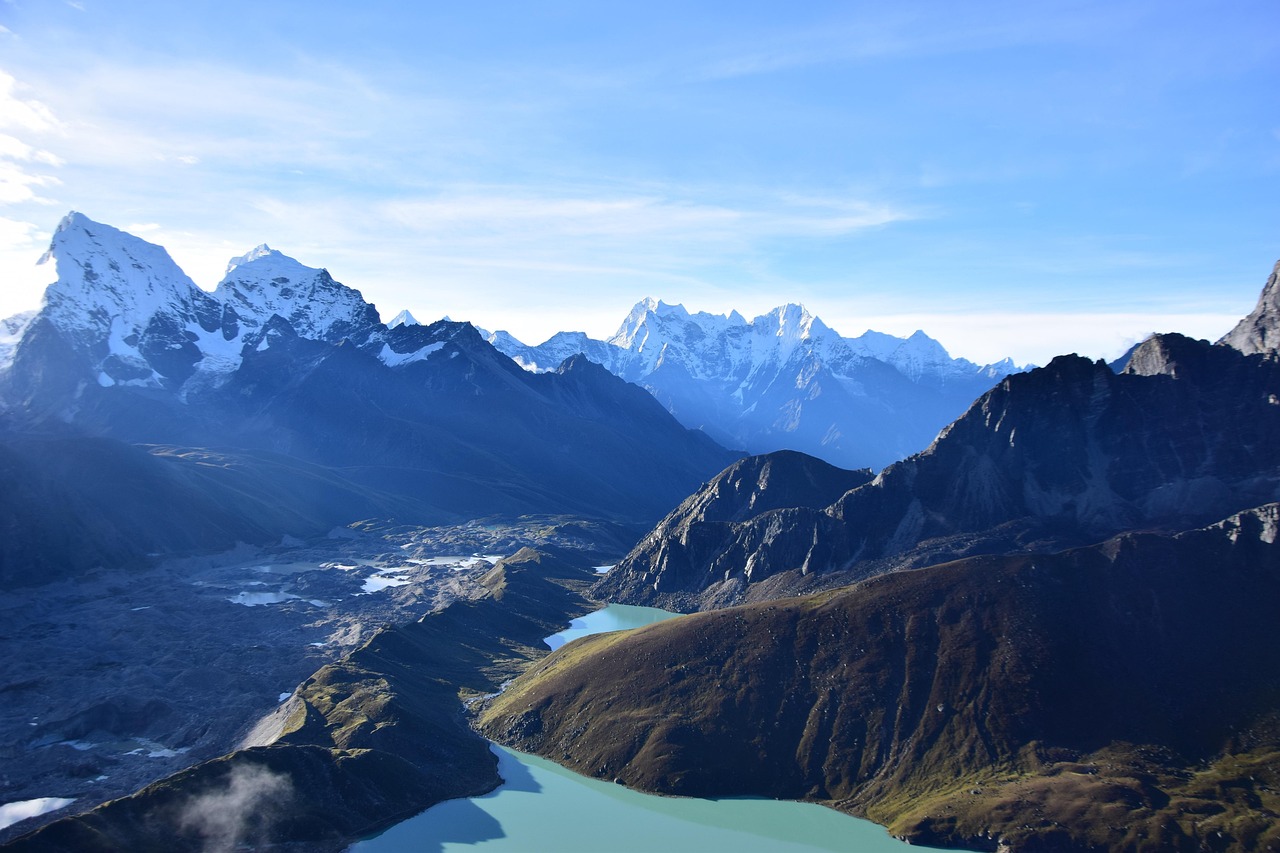
Everest Base Camp Trek
Journey to the base of the world's highest peak through Sherpa villages and stunning mountain vistas
Days
14 Days
Difficulty
Moderate
Max Altitude
5,364m
Best Season
Mar-May, Sep-Nov
Trip Overview
With its ancient culture and the Himalayas as a backdrop, Nepal has long been the destination of choice for travelers in search of adventure. The pathways you will tread will not only take you to the foot of the world's highest mountain through jaw-dropping scenery but will envelop you in the spirit of Nepal and its people.
Trip Information
- Day 1 : Arrival In Kathmandu (1350m)
- Day 2 : Sight Seeing- Trek Briefing & Official Procedures (1350m)
- Day 3 : Fly To Lukla & Trek To Phakding (3-4, 2610m)
- Day 4 : Trek To Namche Bajar (5-7, 3440m)
- Day 5 : Acclimatization Day (3-4 hrs, 3440m)
- Day 6 : Trek To Tengboche Monastery Via Khumjung (5-6 hrs, 3860m)
- Day 7 : Trek To Dingboche (5-6 hrs, 4410m)
- Day 8 : Acclimatization Day (3-4 hrs, 4410m)
- Day 9 : Trek To Lobuche (5-6 hrs, 4910m)
- Day 10 : Trek To Gorakshep - Everest Base Camp - Gorakshep (7-9 hrs, 5364m)
- Day 11 : Trek To Kalapathar - Pheriche (7-9 hrs, 4371m)
- Day 12 : Trek To Namche Bajar (6-8 hrs, 3500m)
- Day 13 : Trek To Lukla (6-9 hrs, 2840m)
- Day 14 : Fly Back To Kathmandu & explore (1350m)
- Day 15 : Final Departure
Day 1: Arrival In Kathmandu
Altitude: 1350m · Stay: Hotel · Meals: Dinner
You touch down in Kathmandu, where the crew from Meander Himalaya will be waiting to welcome you at Tribhuvan International Airport. The drive into the city is your first taste of Nepal: prayer flags strung over rooftops, motorbikes weaving past temple courtyards, the Himalaya still hidden behind the haze. Check in to your hotel and take the rest of the day easy; there's a long journey ahead, and this is the last time you'll sleep below 1,400m for two weeks. In the evening, join your guide for a short welcome briefing over dinner.

Day 2: Sight Seeing- Trek Briefing & Official Procedures
Altitude: 1350m · Stay: Hotel · Meals: Breakfast
A day to prepare, body and paperwork both. In the morning, your guide takes you through a few of Kathmandu's UNESCO-listed sites, think Boudhanath's vast white stupa or the temple spires of Pashupatinath. Afternoon is business: your trekking permits and TIMS card are processed, and you'll sit down with your guide for a full briefing on the days ahead. Use this window to rent or buy any last piece of kit you're missing.
Day 3: Fly To Lukla & Trek To Phakding
Distance: 8km · Walking: 3-4 · Altitude: 2610m · Stay: Teahouse · Meals: Breakfast, Lunch, Dinner
An early start for one of the world's most talked-about flights: a 30-minute hop into Lukla's short mountain airstrip. Step off the plane and you're already in Sherpa country, with Khumbu peaks visible for the first time. From here the trek begins in earnest, a gentle walk down the Dudh Kosi valley past mani walls and prayer flags to the riverside village of Phakding. It's a short day by design, a soft landing into trekking rhythm before the climbing starts.
Day 4: Trek To Namche Bajar
Distance: 11km · Walking: 5-7 · Altitude: 3440m · Stay: Teahouse · Meals: Breakfast, Lunch, Dinner
Today the trail earns its reputation. You'll follow the Dudh Kosi upstream, crossing it several times on swaying suspension bridges strung with prayer flags, including the high Hillary Suspension Bridge, before the trail turns uphill in earnest. The final climb into Namche is steep and sustained, but the reward is one of the best-known views in trekking: your first proper look at Everest, framed between Lhotse and Nuptse. Namche itself is
Day 5: Acclimatization Day
Distance: 4-5 Km · Walking: 3-4 hrs · Altitude: 3440m · Stay: Teahouse · Meals: Breakfast, Lunch, Dinner
Rest days here are never lazy days, the rule at altitude is "climb high, sleep low," so today involves a hike up rather than a day off your feet. Most groups climb to the Everest View Hotel or Khumjung village for another long look at the peaks and a chance to let the body adjust. Namche's Saturday market and Sherpa Culture Museum are worth a wander in the afternoon. You'll sleep back in Namche tonight, lower than where you spent the day.
Day 6: Trek To Tengboche Monastery Via Khumjung
Distance: 10km · Walking: 5-6 hrs · Altitude: 3860m · Stay: Teahouse · Meals: Breakfast, Lunch, Dinner
Leaving Namche, the trail rolls through Khumjung, a quieter Sherpa village, before dropping to the river and climbing again to Tengboche. This is one of the most scenic days on the route: wide-open views of Ama Dablam's distinctive spire accompany you for much of the walk. Tengboche is home to the Khumbu's most important monastery; if timing works out, you may catch the monks' evening prayer.
Day 7: Trek To Dingboche
Distance: 11km · Walking: 5-6 hrs · Altitude: 4410m · Stay: Teahouse · Meals: Breakfast, Lunch, Dinner
The trail drops through rhododendron forest to Debuche before climbing along the Imja Khola valley, and the landscape starts to change: trees thin out, the air sharpens, mountains close in. Dingboche sits in a wide, wind-carved valley walled in by stone, with Ama Dablam now looming close enough to feel its scale properly. This is also where altitude starts to genuinely register for most trekkers.
Day 8: Acclimatization Day
Distance: 5 Km · Walking: 3-4 hrs · Altitude: 4410m · Stay: Teahouse · Meals: Breakfast, Lunch, Dinner
Another built-in rest day, and another hike uphill to earn it. Most groups climb Nangkartshang Hill, a demanding but short ascent above Dingboche that opens onto a huge panorama: Makalu, Lhotse, Ama Dablam. Coming back down to sleep at the same altitude as last night is exactly the acclimatization boost the body needs before pushing higher.
Day 9: Trek To Lobuche
Distance: 7 Km · Walking: 5-6 hrs · Altitude: 4910m · Stay: Teahouse · Meals: Breakfast, Lunch, Dinner
The trail climbs steadily to Thukla, then up the infamous Thukla Pass, a steep, rocky stretch lined with memorial cairns and prayer flags built for climbers and porters who never came home from Everest. Beyond the pass, the trail levels out along a stark, glacier-carved valley to Lobuche, with the Khumbu Glacier's moraine rising just beside it.
Day 10: Trek To Gorakshep - Everest Base Camp - Gorakshep
Distance: 13 Km · Walking: 7-9 hrs · Altitude: 5364m · Stay: Teahouse · Meals: Breakfast, Lunch, Dinner
The day you came for. A morning walk along the Khumbu Glacier's edge brings you to Gorak Shep, the last settlement before Base Camp. Drop your bags and push on for the final round trip across the glacier's moraine to Everest Base Camp itself: a jumble of rock and ice at the foot of the Khumbu Icefall, with no direct view of Everest's summit but an unmistakable sense of arrival. You'll return to Gorak Shep for the night.
Day 11: Trek To Kalapathar - Pheriche
Distance: 16 Km · Walking: 7-9 hrs · Altitude: 4371m · Stay: Teahouse · Meals: Breakfast, Lunch, Dinner
An early, cold, headlamp-lit start to climb Kala Patthar before sunrise, a steep push to 5,545m that delivers the single best view of Everest's summit on the entire trek, since Base Camp itself doesn't offer one. Afterward, a long descent back down through Gorak Shep and Lobuche to Pheriche, where thicker air and warmer nights feel like a genuine relief.
Day 12: Trek To Namche Bajar
Distance: 20 Km · Walking: 6-8 hrs · Altitude: 3500m · Stay: Teahouse · Meals: Breakfast, Lunch, Dinner
With the high point behind you, today is largely about descent and decompression, retracing the trail back through Tengboche's forests and the river crossings near Namche. Legs are tired but the mood tends to lift with every hundred metres of altitude you lose.
Day 13: Trek To Lukla
Distance: 19 Km · Walking: 6-9 hrs · Altitude: 2840m · Stay: Teahouse · Meals: Breakfast, Lunch, Dinner
The last full day of walking retraces your first days in reverse, down through Phakding and back along the Dudh Kosi to Lukla. Most groups mark the last night on the trail with a celebratory dinner alongside the guides and porters who've walked every step with you.
Day 14: Fly Back To Kathmandu & explore
Altitude: 1350m · Stay: Hotel · Meals: Breakfast
A short flight back over the same foothills returns you to Kathmandu's noise, warmth, and oxygen-rich air. The rest of the day is yours, a hot shower, a proper bed, and time to wander Thamel's streets, or simply rest.
Day 15: Final Departure
Meals: Breakfast
Depending on your flight time, there may be a little time for last-minute shopping or a final temple visit before our team transfers you to the airport for your departure, with a full memory card, sore legs, and an Everest Base Camp story you'll be telling for years.
Note: The trek itinerary is a guide only and may be subject to change at short notice.
Required equipment
- Backpack (30 to 40 liters) for daily use
- Duffel bag (provided by us)
- Sleeping bag rated for -15°C or lower (provided by us)
- Trekking poles (provided by us)
- Headlamp with spare batteries
- Water bottles or hydration bladder (2 to 3 liters)
- Water purification tablets or filter
- Trekking boots, waterproof and broken-in
- Camp shoes or sandals for evenings
Clothing list
- Moisture-wicking base layers (top and bottom)
- Fleece or wool mid-layers
- Insulated down jacket
- Trekking trousers, 2 to 3 pairs
- Waterproof and windproof outer shell (jacket and pants)
- Warm hat, sun hat, and buff or scarf
- Gloves, lightweight and insulated pair
- Warm wool socks, 4 to 5 pairs
Personal items
- Passport (with visa) and passport-size photos
- Travel insurance documents
- Cash (Nepali Rupees) for personal expenses
- Personal first-aid kit and any personal medication
- Diamox (for altitude, consult your doctor)
- Sunscreen (high SPF) and lip balm with SPF
- Sunglasses with UV protection
- Hand sanitizer and wet wipes
- Toiletries (biodegradable soap, toothbrush, etc.)
- Quick-dry towel
- Power bank and universal adapter
- Snacks or energy bars
- Camera (extra batteries, memory cards)
Technical climbing equipment
- Not required for this trek (Everest Base Camp is a teahouse trek, no technical climbing gear needed)
Your trek cost includes
- Airport pickup and drop-off in a private vehicle
- 3 nights hotel in Kathmandu (4-star, B&B basis)
- Welcome dinner in Kathmandu at a traditional Nepali restaurant
- Farewell dinner to celebrate the successful trek
- All meals (breakfast, lunch, dinner) during the trek, with tea/coffee included and fresh seasonal fruit served every evening
- Round-trip domestic flight, Kathmandu-Lukla-Kathmandu, for you and your guide(s), including airport taxes
- All ground transportation by private vehicle as per itinerary (Kathmandu airport transfers for the Lukla flight, and other local transfers)
- Sagarmatha National Park Entry Permit
- Khumbu Pasang Lhamu Rural Municipality Entry Permit
- Trekkers' Information Management System (TIMS) card
- Experienced, government-licensed, English-speaking trekking guide
- Assistant trek leader for groups of 6 or more trekkers
- Porter service (1 porter for every 2 trekkers, carrying up to 15 kg)
- Wages, food, accommodation, equipment, insurance, and transportation for all Nepalese staff
- High-altitude first-aid medical kit carried by the guide
- Oximeter checks twice daily to monitor pulse, oxygen saturation, and AMS symptoms
- Emergency helicopter rescue arrangement (cost covered by your travel insurance)
- Satellite phone with the guide for emergency communication (available for member use at an extra charge)
- Complimentary use of sleeping bag, down jacket, duffel bag, and walking poles (returned after the trip)
- Meander Himalaya trekking duffel bag, t-shirt, and detailed trekking map to keep
- Trip achievement certificate on successful completion
- All applicable Government of Nepal taxes and fees
Your trek cost does NOT include
- International airfare to and from Kathmandu
- Nepal visa fee on arrival at Tribhuvan International Airport ($50 USD for 30 days; other durations available)
- Lunch and dinner during your stay in Kathmandu (except the welcome and farewell dinners), including in case of an early return from the trek
- Extra hotel nights in Kathmandu due to early arrival, late departure, flight cancellations, or early return from the trek
- Travel and rescue insurance (mandatory), must cover medical treatment, high-altitude rescue, air evacuation, trip cancellation, and repatriation
- Personal expenses: phone calls, internet, toiletries (soap, shampoo, tissue paper, etc.), laundry, battery charging, hot showers, and alcoholic/non-alcoholic beverages (including mineral water, soft drinks, extra tea/coffee) purchased during the trek
- Personal trekking gPersonal trekking gear: clothing, packing items, bags, and your own medical kitear
- Excess baggage charges on domestic flights (beyond the 10 to 15 kg limit)
- Special permits and fees for filming, cameras, and drone use
- Tips for guides, porters, and drivers (expected and appreciated)
- Any other service or activity not explicitly listed under "Cost Includes"
1. How difficult is the Everest Base Camp Trek? Can beginners do it?
The Everest Base Camp Trek is rated moderate to challenging. It doesn't require technical climbing skills or prior mountaineering experience, but a good level of fitness is essential. You'll trek 5 to 7 hours daily over rugged terrain, reaching 5,545m at Kala Patthar. The real challenge is altitude acclimatization, not the trail itself. We recommend starting physical training at least 2 to 3 months before departure.
2. What permits are required for the Everest Base Camp Trek?
Sagarmatha National Park Entry Permit and Khumbu Pasang Lhamu Rural Municipality Permit is required We manage all permit documentation and processing on your behalf. Just provide your passport copy and photographs.
3. When is the best time for the Everest Base Camp Trek?
Spring (March to May) and autumn (September to November) are the prime seasons, offering stable weather and clear mountain views. Monsoon season (June to August) brings rain and leeches, and winter (December to February) is freezing with limited lodges open.
4. What accommodation and food can I expect?
Accommodation: i) Teahouses (basic mountain lodges) along the route ii) Twin-sharing rooms with warm bedding (sleeping bag liner recommended) iii) Shared bathrooms, hot showers and Wi-Fi available for an extra fee in most villages iv) Facilities get more basic at higher elevations Food: i) Dal Bhat (rice, lentil soup, vegetables, pickle) with unlimited refills ii) Noodles, pasta, soups, and momos iii) Even pizza and pancakes at lower elevations iv) Tea, coffee, and hot drinks
5. Can the Everest Base Camp Trek be shortened?
Yes, we offer fully customizable itineraries tailored to your schedule, fitness level, and preferences.
6. Why trek with us?
The Everest Base Camp Trek is one of the world's most iconic journeys, taking you through Sherpa villages, ancient monasteries, and dramatic Himalayan scenery to the foot of the world's highest peak. Trekking with us gives you local expertise, personalized service, and a strong focus on safety throughout the journey.
Have more questions?
Reach out by email, phone, or through our website FAQ Page for anything on altitude safety, equipment, training, insurance, or itinerary customization.
Have Additional Questions?
Our team can help with altitude safety, packing lists, insurance, or a custom itinerary.