Dolpo Circuit Trek
A remote circuit through Lower Dolpo, crossing Numa La and Baga La to the turquoise waters of Phoksundo Lake, with ancient Bon and Buddhist villages along the way.
Days
17 days
Difficulty
Challenging
Max Altitude
5,190 m
Best Season
Mar-May, Sep-Nov
Trip Overview
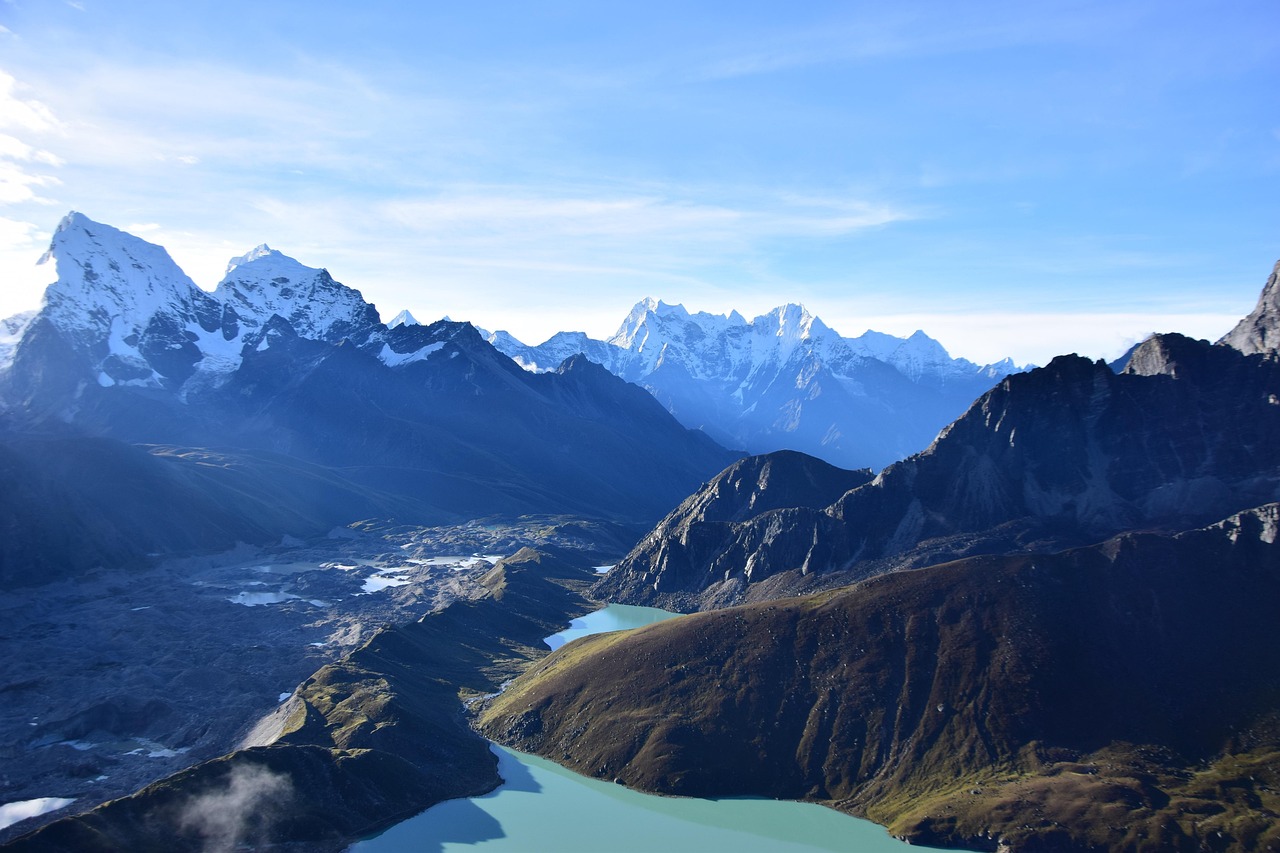
The Dolpo Circuit Trek takes you into one of the most isolated corners of Nepal, a restricted region in the rain shadow of the Dhaulagiri range where Tibetan-influenced culture has changed little over centuries. From the airstrip at Juphal, the trail follows the Thuli Bheri and Tarap river gorges to Dho Tarap, a high valley of stone villages, chortens, and gompas belonging to both the Buddhist and the older Bon traditions. From there the route crosses two high passes, Numa La (5,190m) and Baga La (5,070m), with wide views over the barren Dolpo ranges toward Dhaulagiri and Kanjiroba. The circuit ends at Phoksundo Lake, the deepest lake in Nepal, whose deep turquoise water lies below Ringmo village inside Shey Phoksundo National Park. With few trekkers, long days on rough trail, and two rest days built in, this is a trek for fit walkers who want real remoteness and a living mountain culture.
Trip Information
- Day 1 : Arrival In Kathmandu (1,350 m)
- Day 2 : Sight Seeing- Trek Briefing & Official Procedures
- Day 3 : Fly To Juphal & Trek To Dunai (4-5 hrs, 2,140 m)
- Day 4 : Trek To Tarakot (5-6 hrs, 2,540 m)
- Day 5 : Trek To Laini Odar (6-7 hrs)
- Day 6 : Trek To Nawarpani (5-6 hrs, 3,780 m)
- Day 7 : Trek To Dho Tarap (7-8 hrs, 3,944 m)
- Day 8 : Rest & Acclimatization Day In Dho Tarap (3,944 m)
- Day 9 : Trek To Numa La Base Camp (6-7 hrs, 4,440 m)
- Day 10 : Cross Numa La Pass & Trek To Danigar (7-8 hrs, 4,512 m)
- Day 11 : Cross Bagala Pass & Trek To Timche (6-7 hrs, 3,995 m)
- Day 12 : Trek To Ringmo Gaun (5-6 hrs, 3,641 m)
- Day 13 : Rest Day, Explore Phoksundo Lake
- Day 14 : Trek To Chhepka (7-8 hrs, 2,678m)
- Day 15 : Trek To Juphal (6-7 hrs, 2,475 m)
- Day 16 : Fly To Kathmandu Via Nepalgunj (1,350 m)
- Day 17 : Final Departure
Day 1: Arrival In Kathmandu
Altitude: 1,350 m · Stay: Hotel · Meals: Dinner
Welcome to Nepal! Step off the plane into Kathmandu's warm chaos, where a Meander Himalaya teammate will be waving you down at arrivals. Settle into your hotel and meet your guide over dinner, Lower Dolpo is one of the most remote, untouched corners of the Himalaya, and very few trekkers ever make it here.
Day 2: Sight Seeing- Trek Briefing & Official Procedures
Stay: Hotel · Meals: Breakfast
A day to soak in Kathmandu's magic before the mountains take over. Wander through Boudhanath's vast stupa and Pashupatinath's riverside temples, then sit down with your guide for a full briefing on the days ahead. Lower Dolpo is a restricted area, so your original passport is submitted today to process the special trekking permit. In the afternoon, a scenic flight carries you south to Nepalgunj, a lowland gateway city and your launch point into the Dolpo region tomorrow.
Day 3: Fly To Juphal & Trek To Dunai
Distance: 11 km · Walking: 4-5 hrs · Altitude: 2,140 m · Stay: Teahouse · Meals: Breakfast, Lunch, Dinner
An early morning flight into Juphal drops you straight into Dolpo's dramatic terrain. From the airstrip, the trail winds through terraced fields down to the Bheri River and through a narrow canyon to Dunai, the administrative headquarters of the region. This is proper off-the-map trekking, no crowds, no teahouse chains, just genuine Himalayan wilderness.
Day 4: Trek To Tarakot
Distance: 16 km · Walking: 5-6 hrs · Altitude: 2,540 m · Stay: Teahouse · Meals: Breakfast, Lunch, Dinner
Cross the Thuli Bheri River and climb through scenic, remote countryside to Tarakot, a beautiful village home to an old stone fort. This is one of the last proper settlements before the trail turns genuinely wild.
Day 5: Trek To Laini Odar
Distance: 14 km · Walking: 6-7 hrs · Stay: Teahouse · Meals: Breakfast, Lunch, Dinner
Continue deeper into the mountains along increasingly rugged trails, gaining altitude steadily as the scenery grows starker and more dramatic. Laini Odar is a small, isolated settlement, and from here on, the sense of isolation only deepens.
Day 6: Trek To Nawarpani
Distance: 11 km · Walking: 5-6 hrs · Altitude: 3,780 m · Stay: Teahouse · Meals: Breakfast, Lunch, Dinner
The terrain turns properly rugged today, with the flora and fauna shifting noticeably as you climb higher. Nawarpani is a peaceful, remote stop, a good spot to feel just how far off the beaten path this trek has taken you.
Day 7: Trek To Dho Tarap
Distance: 20 km · Walking: 7-8 hrs · Altitude: 3,944 m · Stay: Teahouse · Meals: Breakfast, Lunch, Dinner
A long, rewarding day brings you to Dho Tarap, one of the most culturally rich villages in all of Dolpo. This is Bon country, a pre-Buddhist religion practiced here for over 3,000 years, and the traditional way of life on display is unlike anywhere else on Nepal's trekking circuits.
Day 8: Rest & Acclimatization Day In Dho Tarap
Altitude: 3,944 m · Stay: Teahouse · Meals: Breakfast, Lunch, Dinner
A well-earned pause to let your body adjust before the high passes ahead. Explore Dho Tarap's monasteries, chat with local Bon practitioners, and take in a village and culture that very few outsiders ever get to experience firsthand.
Day 9: Trek To Numa La Base Camp
Distance: 12 km · Walking: 6-7 hrs · Altitude: 4,440 m · Stay: Teahouse · Meals: Breakfast, Lunch, Dinner
Begin the steady climb toward Numa La Base Camp, with the terrain growing more demanding and the mountain views growing bigger with every step. Rest well tonight, tomorrow brings the toughest stretch of the entire trek.
Day 10: Cross Numa La Pass & Trek To Danigar
Distance: 18 km · Walking: 7-8 hrs · Altitude: 4,512 m · Stay: Teahouse · Meals: Breakfast, Lunch, Dinner
An early, demanding climb takes you over Numa La (5,315m), the highest point of the entire trek. Prayer flags snap in the wind at the top, with Dhaulagiri rising to the south and Kanjiroba to the north, few moments in Nepal trekking feel this remote or this earned. Descend to Danigar on the far side, legs tired but spirits high.
Day 11: Cross Bagala Pass & Trek To Timche
Distance: 10 km · Walking: 6-7 hrs · Altitude: 3,995 m · Stay: Teahouse · Meals: Breakfast, Lunch, Dinner
A second demanding pass in as many days, Bagala La (5,169m) is rockier and more exposed than Numa La, but the descent on the far side drops you toward the Phoksundo Lake valley, and the reward becomes clear almost immediately.
Day 12: Trek To Ringmo Gaun
Distance: 11 km · Walking: 5-6 hrs · Altitude: 3,641 m · Stay: Teahouse · Meals: Breakfast, Lunch, Dinner
A gentler day brings you into Ringmo Gaun, a village perched near the shore of Phoksundo Lake, Nepal's deepest and one of its most striking. Traditional Bon architecture and a genuinely warm welcome await after two hard days over the passes.
Day 13: Rest Day, Explore Phoksundo Lake
Distance: 3,612 m · Stay: Teahouse · Meals: Breakfast, Lunch, Dinner
A full day to properly take in Phoksundo Lake, a startlingly turquoise, glacier-fed lake framed by cliffs and pine forest, sacred to local Buddhists and Bon practitioners alike. Walk the shoreline, visit the hilltop Bon monastery overlooking the water, and simply sit with a view that very few people ever see in person.
Day 14: Trek To Chhepka
Distance: 20 km · Walking: 7-8 hrs · Altitude: 2,678m · Stay: Teahouse · Meals: Breakfast, Lunch, Dinner
Begin the descent out of Dolpo's high country, dropping through beautiful pine forest and increasingly green terrain toward Chhepka. The scenery softens noticeably here after days spent above the treeline.
Day 15: Trek To Juphal
Distance: 19 km · Walking: 6-7 hrs · Altitude: 2,475 m · Stay: Teahouse · Meals: Breakfast, Lunch, Dinner
A final trekking day brings you back to Juphal, closing the loop on one of the most remote and rewarding circuits in the entire Himalaya. Take a moment tonight to properly reflect on everything the past two weeks have covered.
Day 16: Fly To Kathmandu Via Nepalgunj
Altitude: 1,350 m · Stay: Hotel · Meals: Breakfast
A pair of scenic flights, Juphal to Nepalgunj, then Nepalgunj to Kathmandu, carries you back to the capital, mountain wilderness gradually giving way to city life. Settle back into your hotel, a hot shower has rarely felt this good.
Day 17: Final Departure
Meals: Breakfast
Time to say farewell to Nepal, at least for now. With two high passes, the sacred waters of Phoksundo Lake, and one of the most remote, untouched regions in the Himalaya all behind you, our team will see you off at the airport for your onward journey. Namaste, and until next time!
Note: The trek itinerary is a guide only and may be subject to change at short notice.
Required equipment
- Backpack (30 to 40 liters) for daily use
- Duffel bag (provided by us)
- Sleeping bag rated for -15°C or lower (provided by us)
- Trekking poles (provided by us)
- Headlamp with spare batteries
- Water bottles or hydration bladder (2 to 3 liters)
- Water purification tablets or filter
- Trekking boots, waterproof and broken-in
- Camp shoes or sandals for evenings
Clothing list
- Moisture-wicking base layers (top and bottom)
- Fleece or wool mid-layers
- Insulated down jacket
- Waterproof and windproof outer shell (jacket and pants)
- Trekking trousers, 2 to 3 pairs
- Warm hat, sun hat, and buff or scarf
- Gloves, lightweight and insulated pair
- Warm wool socks, 4 to 5 pairs
Personal items
- Passport (with visa) and passport-size photos
- Travel insurance documents
- Cash (Nepali Rupees) for personal expenses, no ATMs beyond Kathmandu or Nepalgunj
- Personal first-aid kit and any personal medication
- Sunscreen (high SPF) and lip balm with SPF
- Sunglasses with UV protection
- Hand sanitizer and wet wipes
- Toiletries (biodegradable soap, toothbrush, etc.)
- Quick-dry towel
- Power bank and universal adapter
- Energy bars, nuts, dried fruit (limited food variety in remote Dolpo villages)
- Camera (extra batteries, memory cards)
Technical climbing equipment
- Not required for the standard trek, though prior experience above 4,500m is beneficial for the Numa La and Baga La pass crossings
Your trek cost includes
- Airport pickup and drop-off in a private vehicle
- 3 nights hotel in Kathmandu (4-star, B&B basis)
- Welcome dinner in Kathmandu at a traditional Nepali restaurant
- Farewell dinner to celebrate the successful trek
- All meals (breakfast, lunch, dinner) during the trek, with tea/coffee included and fresh seasonal fruit served every evening
- Round-trip domestic flights, Kathmandu-Nepalgunj-Juphal and return, including airport taxes
- All ground transportation by private vehicle as per itinerary
- Shey Phoksundo National Park Entry Permit
- Restricted Area Permit (RAP) for Lower Dolpo
- Trekkers' Information Management System (TIMS) card
- Experienced, government-licensed, English-speaking trekking guide
- Assistant trek leader for groups of 6 or more trekkers
- Porter service (1 porter for every 2 trekkers, carrying up to 15 kg)
- Wages, food, accommodation, equipment, insurance, and transportation for all Nepalese staff
- High-altitude first-aid medical kit carried by the guide
- Oximeter checks twice daily to monitor pulse, oxygen saturation, and AMS symptoms
- Emergency helicopter rescue arrangement (cost covered by your travel insurance)
- Satellite phone with the guide for emergency communication (available for member use at an extra charge)
- Complimentary use of sleeping bag, down jacket, duffel bag, and walking poles (returned after the trip)
- Meander Himalaya trekking duffel bag, t-shirt, and detailed trekking map to keep
- Trip achievement certificate on successful completion
- All applicable Government of Nepal taxes and fees
Your trek cost does NOT include
- International airfare to and from Kathmandu
- Nepal visa fee on arrival at Tribhuvan International Airport ($50 USD for 30 days; other durations available)
- Lunch and dinner during your stay in Kathmandu (except the welcome and farewell dinners), including in case of an early return from the trek
- Extra hotel nights in Kathmandu or Nepalgunj due to early arrival, late departure, flight cancellations, or early return from the trek
- Travel and rescue insurance (mandatory), must cover high-altitude trekking to 5,200m and emergency air evacuation
- Personal expenses: phone calls, internet, toiletries (soap, shampoo, tissue paper, etc.), laundry, battery charging, hot showers, and alcoholic/non-alcoholic beverages (including mineral water, soft drinks, extra tea/coffee) purchased during the trek
- Personal trekking gear: clothing, packing items, bags, and your own medical kit
- Excess baggage charges on domestic flights (beyond the 10 to 15 kg limit, strictly enforced on the small Juphal aircraft)
- Special permits and fees for filming, cameras, and drone use
- Tips for guides, porters, and drivers (expected and appreciated)
- Any other service or activity not explicitly listed under "Cost Includes"
1. What makes the Dolpo Circuit Trek special?
One of Nepal's most remote and least-visited regions, sitting in the rain shadow of the Dhaulagiri range with a Tibetan-influenced Bon and Buddhist culture largely untouched by mass tourism. The trek crosses two high passes, Numa La (5,190m) and Baga La (5,070m), and ends at Phoksundo Lake, Nepal's deepest lake, inside Shey Phoksundo National Park.
2. How difficult is it? Can beginners do it?
Rated challenging, not for technical skill, but for remoteness, altitude, and long trekking days on rough trail. Several days involve 6 to 8 hours of walking, with two high passes back to back. This trek suits experienced trekkers who've already completed at least one multi-day trek above 4,000m.
3. What permits do I need?
The Shey Phoksundo National Park Entry Permit and a Restricted Area Permit (RAP) for Lower Dolpo, both processed only through a registered agency. Solo trekking is prohibited, a licensed guide and a minimum group size apply. We handle all documentation for you.
4. What is the best time to trek?
Spring (March to May) and autumn (September to November) are best. Flights to Juphal are weather-dependent and can be delayed, so build a buffer day or two into your travel plans either side of the trek.
5. What accommodation and food can I expect?
Basic teahouses and community lodges, sparser than the Annapurna or Everest regions, expect simple rooms, shared bathrooms, and limited menu variety in remote villages like Dho Tarap. Food is simple: dal bhat, noodles, and local staples, we recommend bringing extra snacks for variety.
Have more questions?
Reach out by email, phone, or through our website FAQ Page for anything on altitude safety, equipment, training, insurance, or itinerary customization.
Have Additional Questions?
Our team can help with altitude safety, packing lists, insurance, or a custom itinerary.